A Designer's Review of the "I Do What I Want" Cat Embroidery Design
Every experienced embroiderer knows that a great design file isn't just about the artwork—it’s about how that artwork translates into thread and fabric. The “I Do What I Want Cat Funny SVG PNG Print” arrives with a premise we all understand: the delightful, stubborn independence of cats. But as a designer reviewing this for real project use, my first question is always, “Will this stitch out well, and where does it truly shine?”
First Impressions: Vintage Charm with a Rebellious Spark
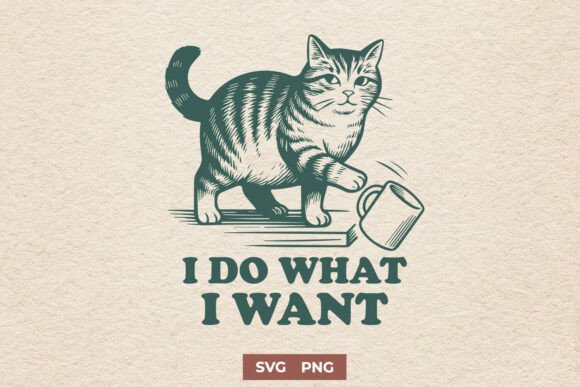
Opening this graphics file, the initial mood is playful and nostalgic. The vintage-style illustration of the cat knocking over a mug is executed with a clear, bold line art style. The attitude is captured perfectly in the posture and expression. For an embroidery project, this is promising. The layout is centered and balanced, with the cat as the clear focal point and the text acting as a supportive banner rather than a competing element. The detail level feels intentional: enough character to be charming, but not overwhelmingly intricate, which suggests it won’t become a tangled mess of stitches on smaller items.
This visual personality is a winner for handmade products. It doesn’t feel generic; it feels like a story. That story—of feline rebellion—immediately suggests applications. It’s not just a graphic; it’s a conversation starter for an embroidered tote bag, a witty accent on a kitchen towel, or a perfect personalized gift for that cat-loving friend.
Where This Design Finds Its Best Home
In practical embroidery situations, a design’s success is tied to its context. The “I Do What I Want” cat design naturally belongs on items where humor and personality are front and center. For custom apparel, think casual sweatshirts or relaxed t-shirts—it’s a statement piece, not corporate branding. For small business merchandise, it’s ideal for Etsy sellers focusing on pet lovers, quirky home decor, or humorous accessories.
I envision it embroidered on a canvas tote bag, the bold lines standing up well to the fabric’s texture. On a baby’s bib or a nursery pillow cover, it becomes a sweet, funny touch for a “cat family.” As an embroidered patch, it could be brilliant, easily applied to a cap or a backpack. For holiday gifts, like a cheeky tea towel or a cozy blanket, it adds that personal, handmade touch that generic gifts lack. In a boutique setting, this design on a simple apron or pillow cover elevates a basic item into a themed, giftable product.
A Real-Life Scenario: The Custom Tote Bag Project
Let’s walk through a typical use case. A client requests a custom embroidered tote bag with a funny, cat-themed design. I load the “I Do What I Want” file. My immediate considerations are scale and fabric. The tote’s cotton canvas is substantial, so I’ll need good stabilizer. The design’s composition means it can work well within a moderate hoop size, centered nicely. I’d likely choose a satin stitch for the bold outlines of the cat and mug for clarity, and a fill stitch for the larger areas like the cat’s body, ensuring the vintage shading effect translates without becoming too dense. The text, “I Do What I Want,” needs attention—small lettering can be tricky. I’d test the stitch out on scrap fabric first to check the readability, especially if stitching on a darker background.
The final result on the tote would be visually striking. The clear, humorous scene increases the product’s perceived value. It feels custom, thoughtful, and professionally executed, which builds customer trust. For an Etsy seller or craft fair vendor, that finished product photographed well becomes an engaging listing, telling a story that buyers connect with instantly.
Careful Application: When to Proceed with Caution
No design is universally perfect, and a professional review must highlight where caution is needed. The “I Do What I Want” design, with its detailed illustration and text, should be used carefully on very small hoop sizes. Scaling it down too much for a tiny baby garment or a cap’s curved surface could compromise the clarity of the knocked-over mug and the smaller lettering.
Textured or stretchy fabrics, like some knit sweatshirts, require extra stabilizer and possibly adjusting stitch density to prevent distortion. On thin fabrics, the potential stitch density of the filled areas needs to be reviewed to avoid puckering. Dark fabrics demand careful thread color contrast planning—a test in a black-and-white mockup is wise to see if the design’s layers still hold their shape.
For products that will undergo frequent washing, like apparel or kitchen towels, the integrity of the stitches in the more detailed corners (the mug handle, the cat’s ears) is key. A robust running stitch outline might be preferable to a delicate satin stitch in those spots for durability.
The Impact on Your Craft Business and Customer Appeal
Beyond the stitch-out, this embroidery design affects your work’s broader appeal. Its strong, recognizable theme aids in brand consistency if you’re a maker focused on pet-themed or humorous goods. It’s inherently giftable, which is a huge market for handmade shops. The professionalism of a well-executed embroidery of this clear design enhances the overall presentation, making it look less like a hobby project and more like a premium boutique product.
For digital product sellers offering the file itself, clean, well-structured graphics like this are valuable design assets. They allow for clear printable mockups that help other crafters visualize the final embroidered product, boosting buyer engagement with your digital embroidery file listing.
Practical Designer Notes Before You Hoop Up
Before committing this design to a client project or your small shop merchandise, here are my grounded, routine checks:
- Test on Scrap First: Always run the embroidery file on a scrap of your target fabric. This reveals truth about thread color contrast, stitch density issues, and the behavior of small details.
- Background Contrast: Compare how it looks conceptually on both light and dark fabric backgrounds. The vintage style might need brighter thread choices on dark materials.
- Hoop Size & Stabilizer: Confirm your intended hoop size can accommodate the design without needing excessive scaling. Match your stabilizer to the fabric texture—woven cotton versus stretchy fleece require different approaches.
- Project Scope: Is this for a personal gift or commercial embroidery? Check the licensing terms of the graphics file. Never assume a digital file is automatically licensed for commercial use; confirm this before selling finished products.
- Machine Compatibility: Ensure the file formats (SVG, PNG as mentioned) are compatible with your embroidery machine or software for digitizing. This is a fundamental step often overlooked.
The “I Do What I Want Cat Funny SVG PNG Print” has the foundational charm and structural clarity that make an embroidery project successful. It invites creativity in application—from a simple pillow cover to a full line of cat-themed boutique products. But its real value is unlocked by the maker’s careful preparation. Test it, understand its needs on your specific fabrics, and choose products that complement its bold, playful personality. When you do, it stitches out not just as a design, but as a story your customers will love to wear, use, and gift.